
Overview
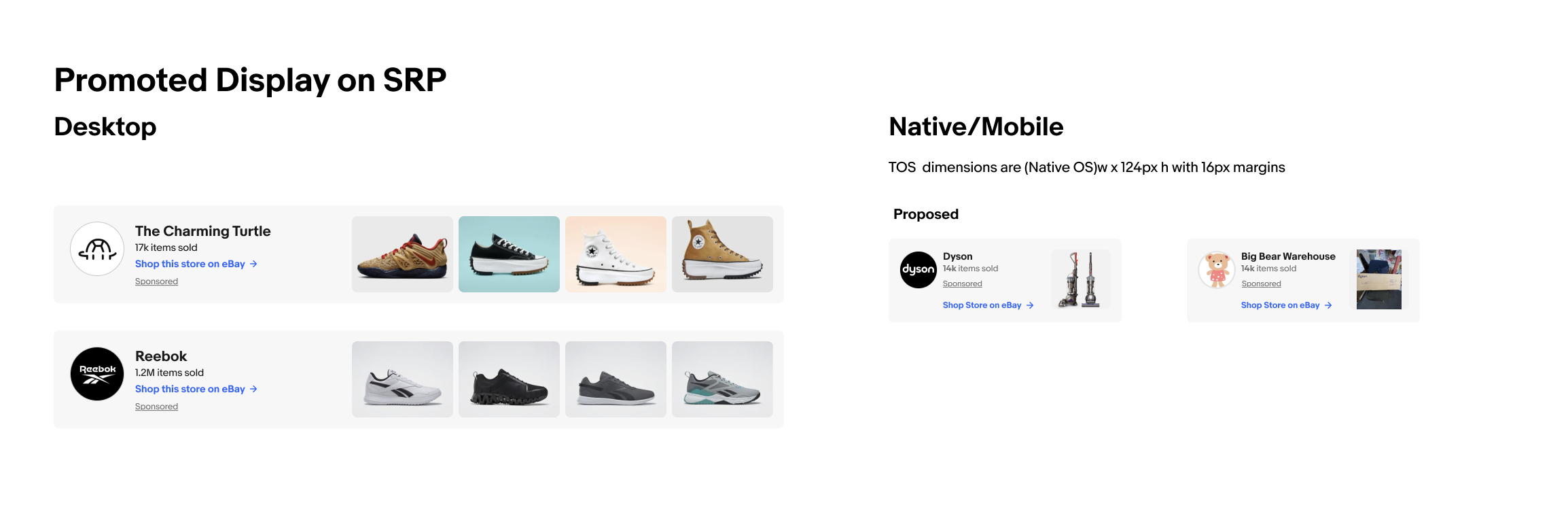
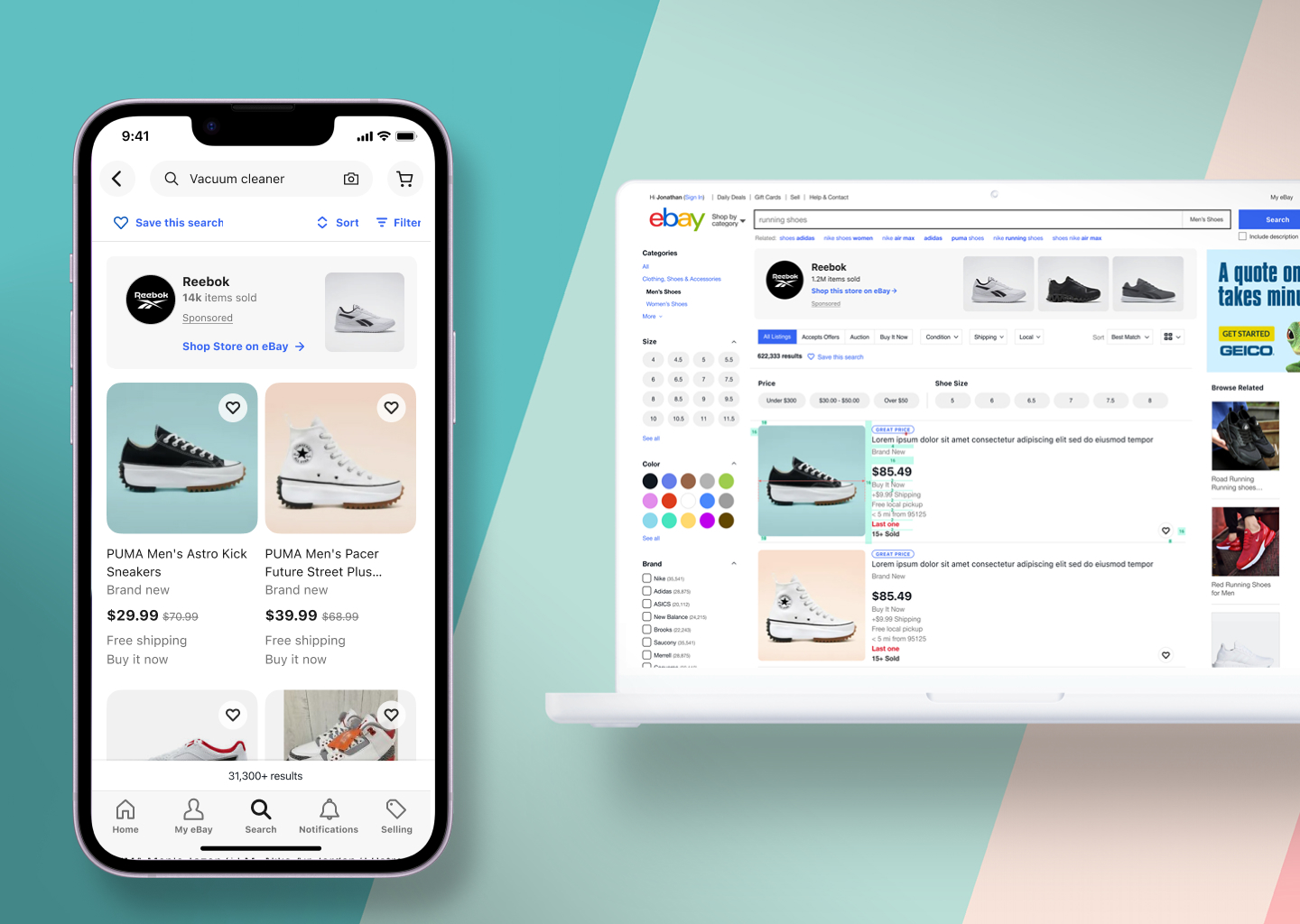
I designed product display advertising experiences for eBay's mobile applications and responsive web platforms. The initiative aimed to expand eBay's control over sponsored advertising while creating opportunities for sellers and brands.
The challenge was balancing advertising requirements, legal disclosures, accessibility considerations, and usability within limited screen space.
PRODUCED
2023-2023
CLIENT
COLLABORATION
Product Management
Engineering
Legal
UX Research
Design
THE PROBLEM
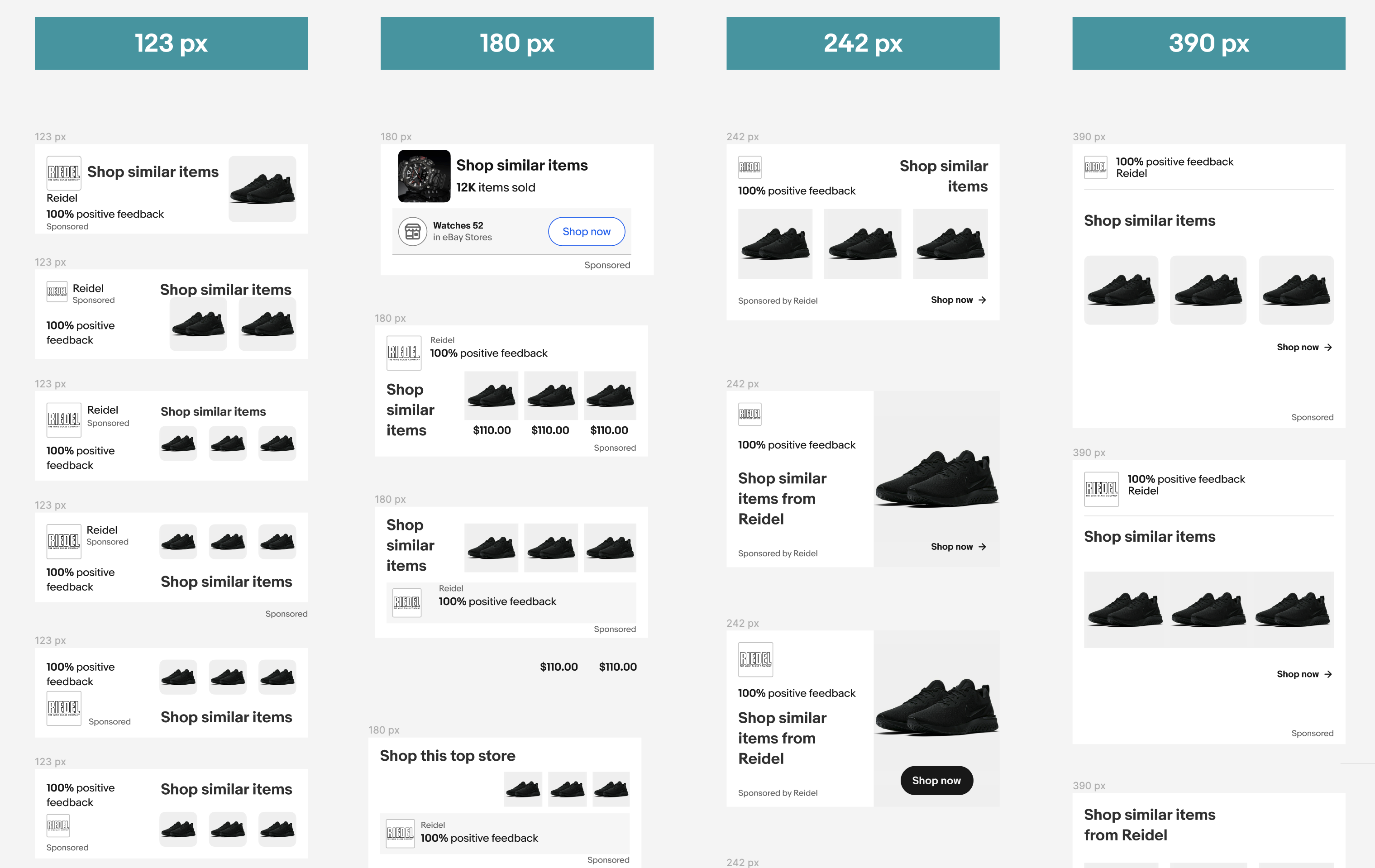
The original advertising requirements included a seller logo, store name, trust indicators, headline, call to action, sponsored disclosure, and three product images. On smaller mobile devices, these requirements created crowded layouts with limited room for readable content and usable touch targets. The experience needed to support advertising objectives without compromising usability or eBay's design standards.
MY ROLE
As a Senior Product Designer, I led the UX design effort across mobile and responsive web experiences. I conducted competitive research, explored advertising layouts, developed prototypes, and collaborated with product managers, engineers, legal stakeholders, and leadership to negotiate requirements and evaluate solutions.
PROCESS
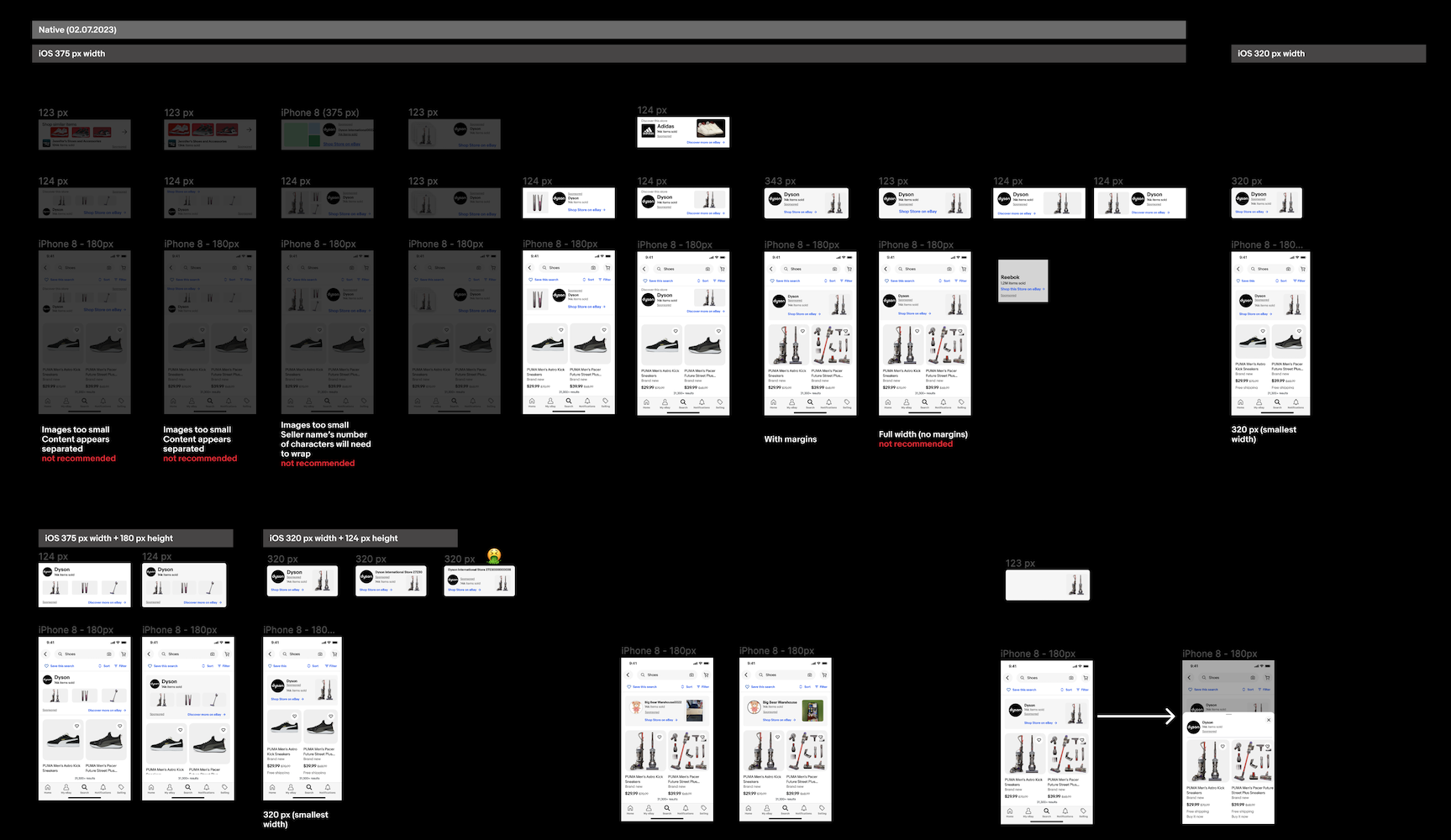
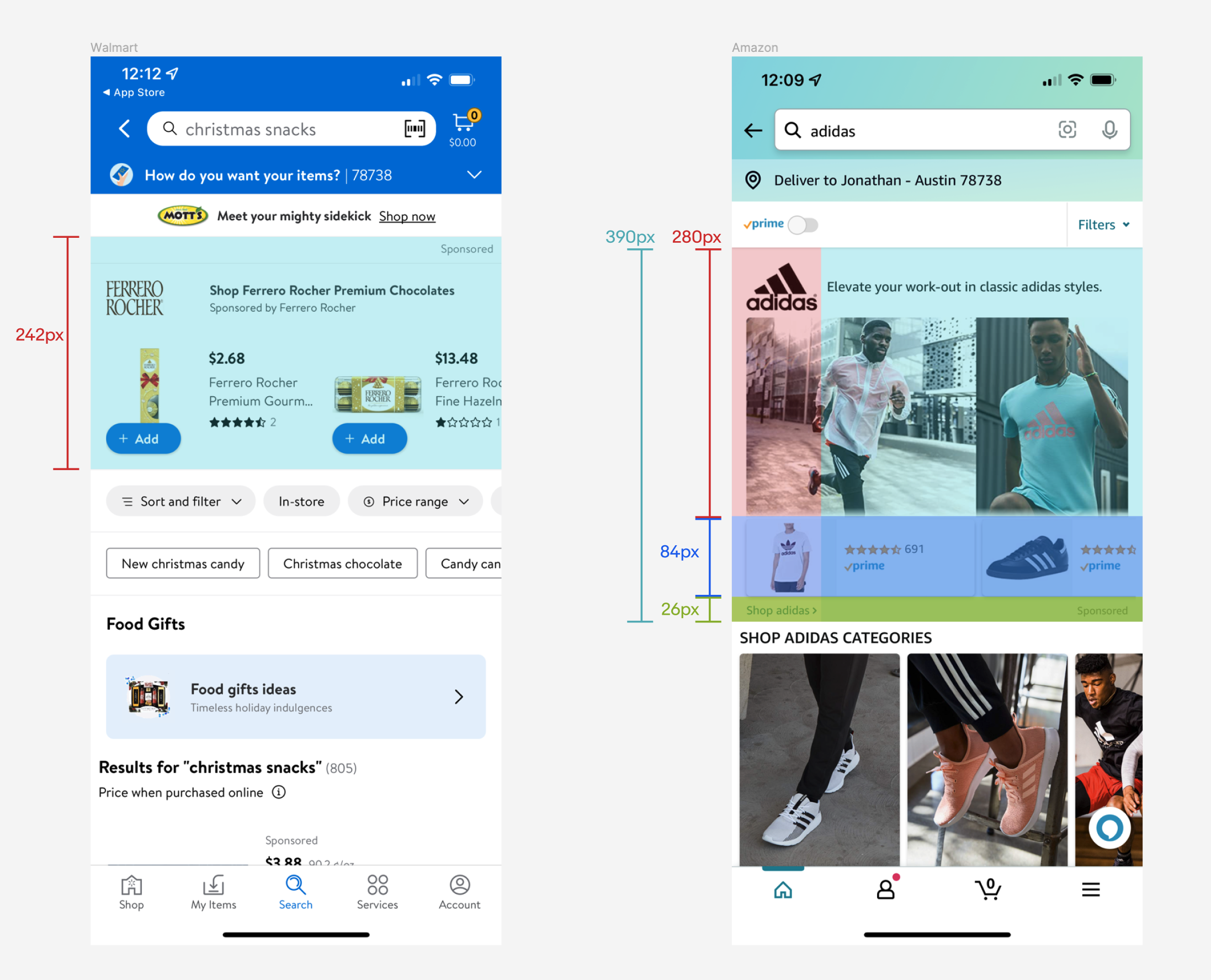
I began by studying advertising patterns across competing commerce platforms, including Amazon and Walmart, to understand common dimensions, content hierarchy, and mobile constraints. I explored multiple layouts across different screen sizes, including smaller devices with limited viewport widths.
Through iterative reviews, I challenged requirements creating unnecessary complexity. I secured approval to simplify advertising copy, combine the headline and call to action, and explore alternatives to displaying three product images simultaneously.
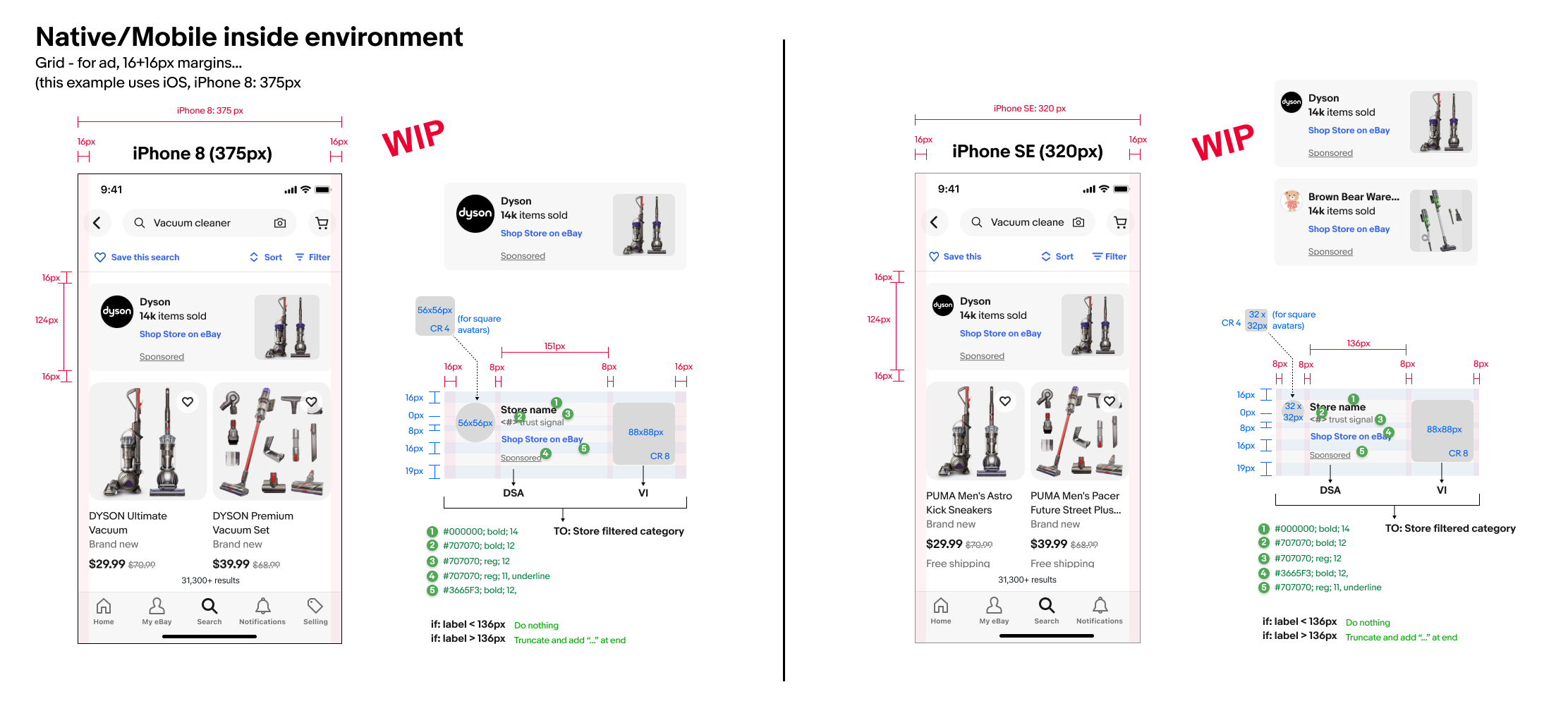
Engineering constraints introduced another challenge: a 124-pixel-high advertising container. I had already explored compact layouts, allowing the team to evaluate feasible alternatives without restarting the design process.
DESIGN
The design evolved through multiple rounds of iteration, stakeholder reviews, and user feedback. I explored single-image layouts to improve visual clarity and reduce content density. When the team needed to preserve access to multiple product images, I proposed rotating images within the available advertising space.
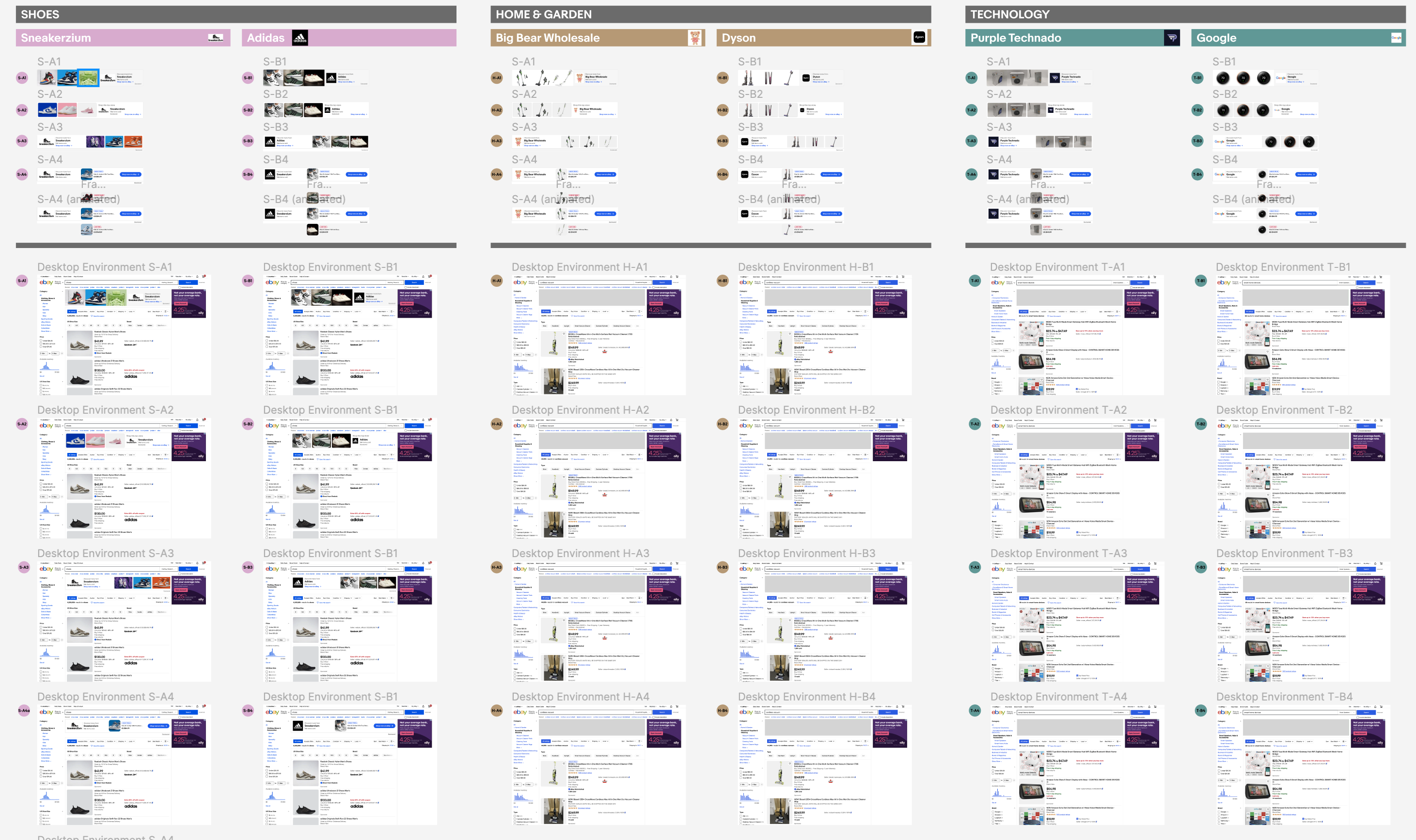
This approach helped reconcile business requirements, legal considerations, technical limitations, and user experience goals. I then extended the design exploration across responsive desktop and native mobile experiences, refining typography, image proportions, content hierarchy, and interaction patterns.
OUTCOME
The team aligned on an advertising design direction informed by user feedback, engineering feasibility, and stakeholder reviews. The final designs established a consistent approach to sponsored content across mobile and responsive web experiences while addressing constrained screen sizes and advertising requirements. The project reinforced an important principle of my design leadership: effective design sometimes requires challenging the original requirements, negotiating trade-offs, and helping teams reach better decisions.