
Overview
Following T-Mobile's $26 billion merger with Sprint in 2020, the company faced one of the largest telecommunications integration efforts in U.S. history, bringing together two major wireless networks and millions of customers.
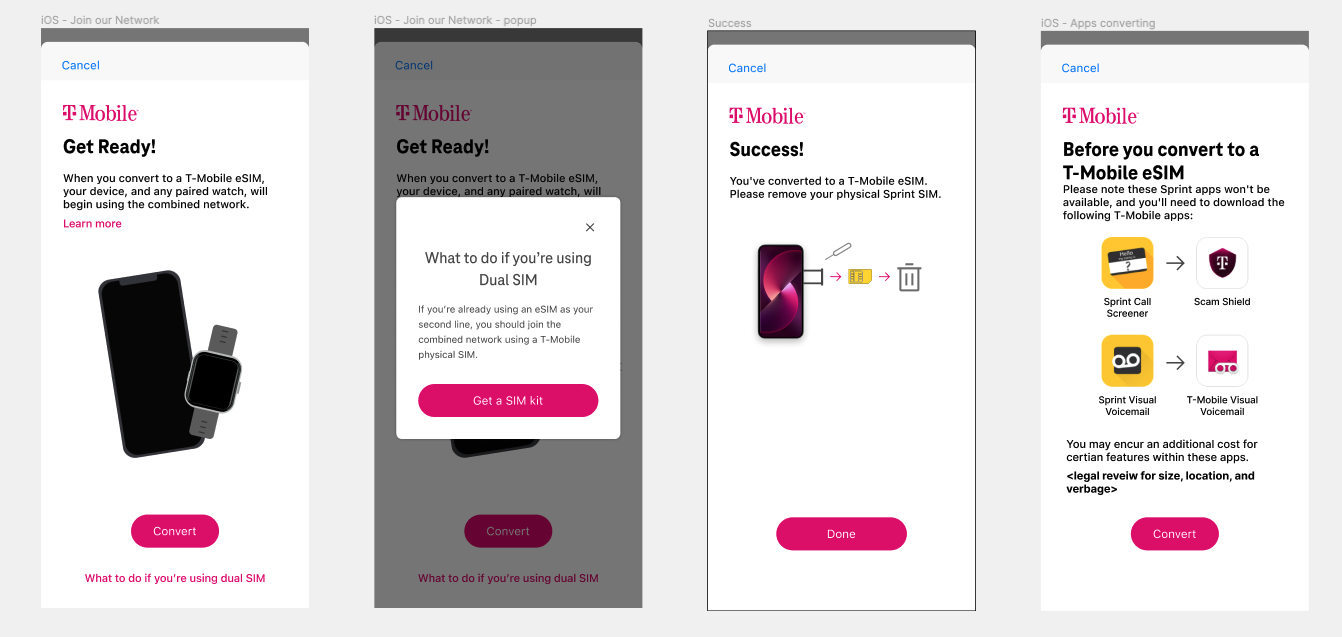
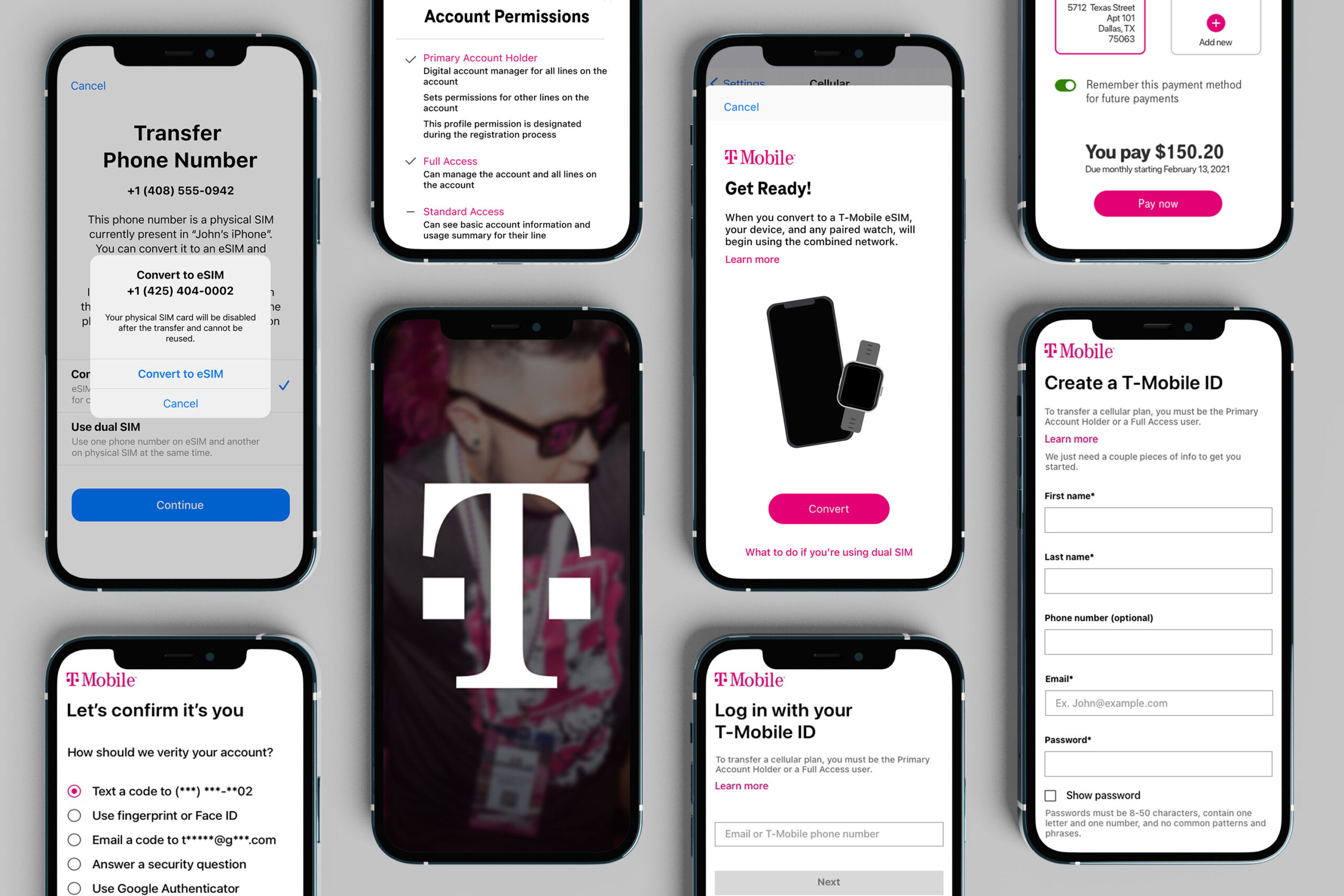
As a Senior Product Designer, I contributed to the mobile activation and SIM conversion experiences supporting this transition. My work focused on simplifying complex provisioning requirements across physical SIMs, eSIMs, smartphones, and connected devices, helping create a more understandable migration experience for customers.
THE PROBLEM
Migrating customers between networks involved more than replacing a SIM card. Customers used different generations of iPhones and Android devices, some supporting physical SIMs, others supporting eSIMs, and many connected to cellular smartwatches. Each configuration introduced different provisioning requirements, compatibility limitations, and potential failure points. The challenge was to design an activation experience that guided customers through the correct process without requiring them to understand the underlying telecommunications infrastructure.
MY ROLE
As a Senior Product Designer, I helped define the user experience for SIM conversion and mobile activation across iOS and Android. Drawing on my previous telecommunications experience in Japan, I brought knowledge of mobile networks, SIM provisioning, and device compatibility to the design process. I collaborated with product managers, engineers, developers, and fellow designers to understand technical requirements, identify edge cases, and translate complex provisioning scenarios into usable interaction flows.
PROCESS
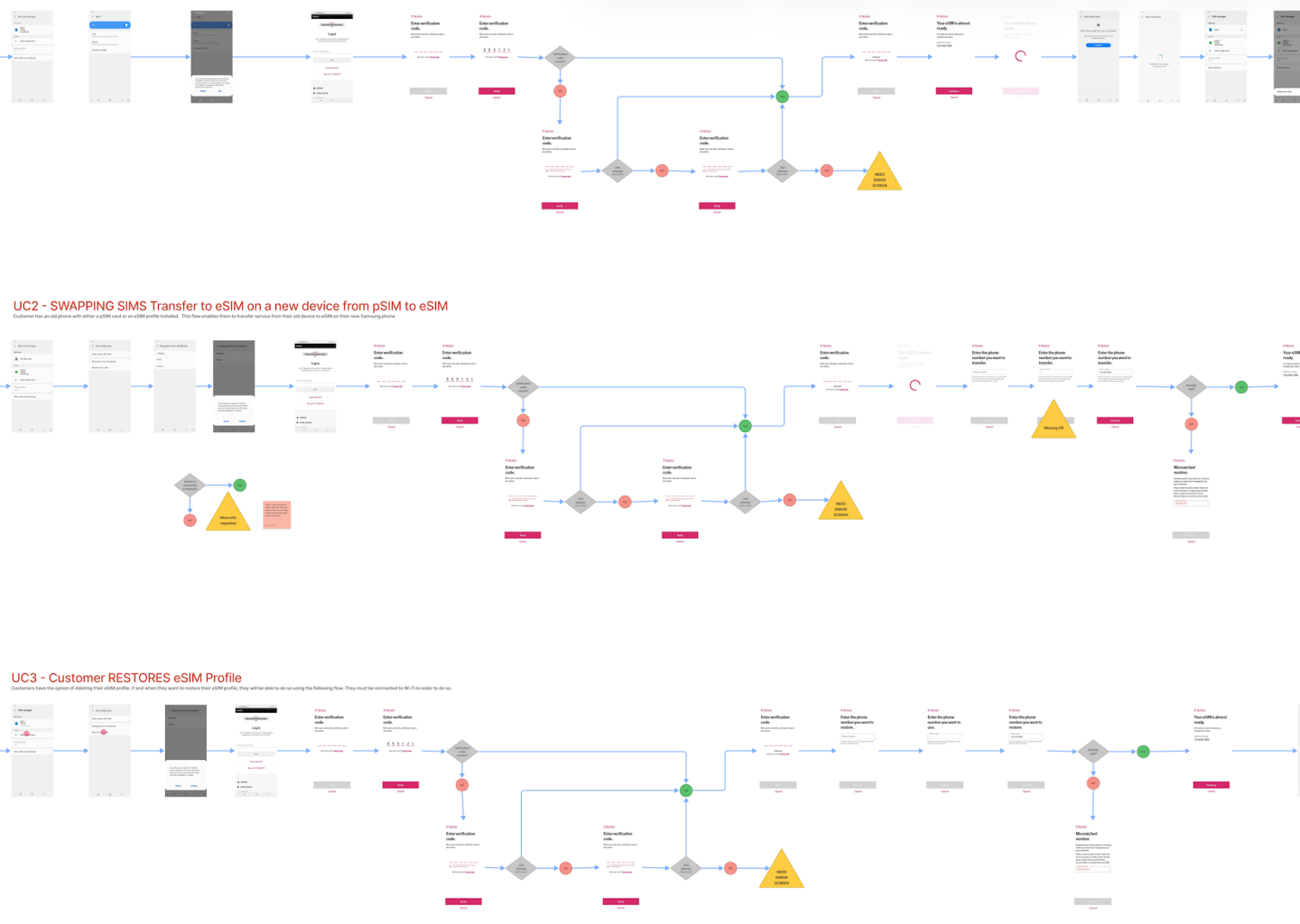
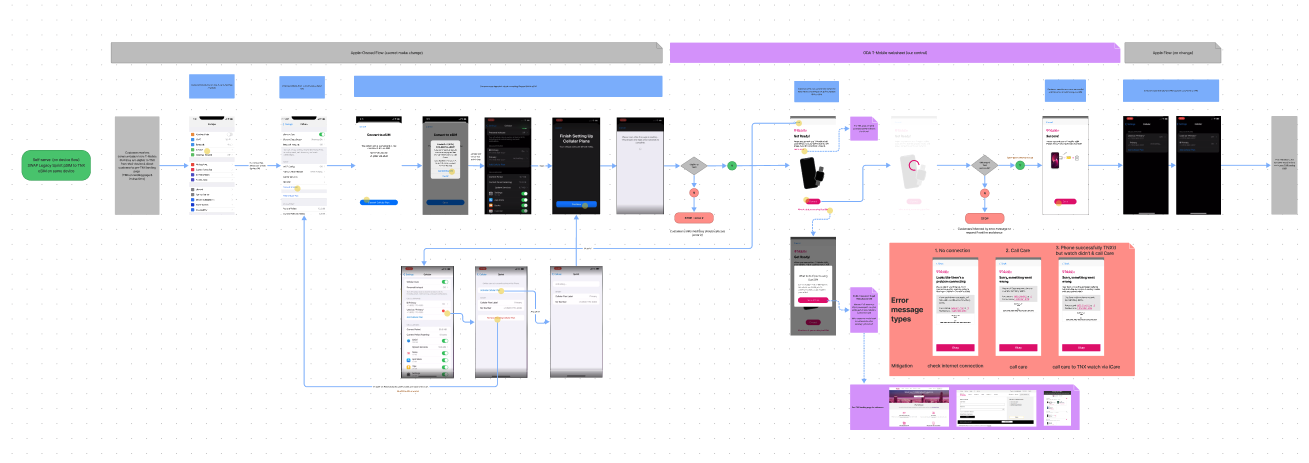
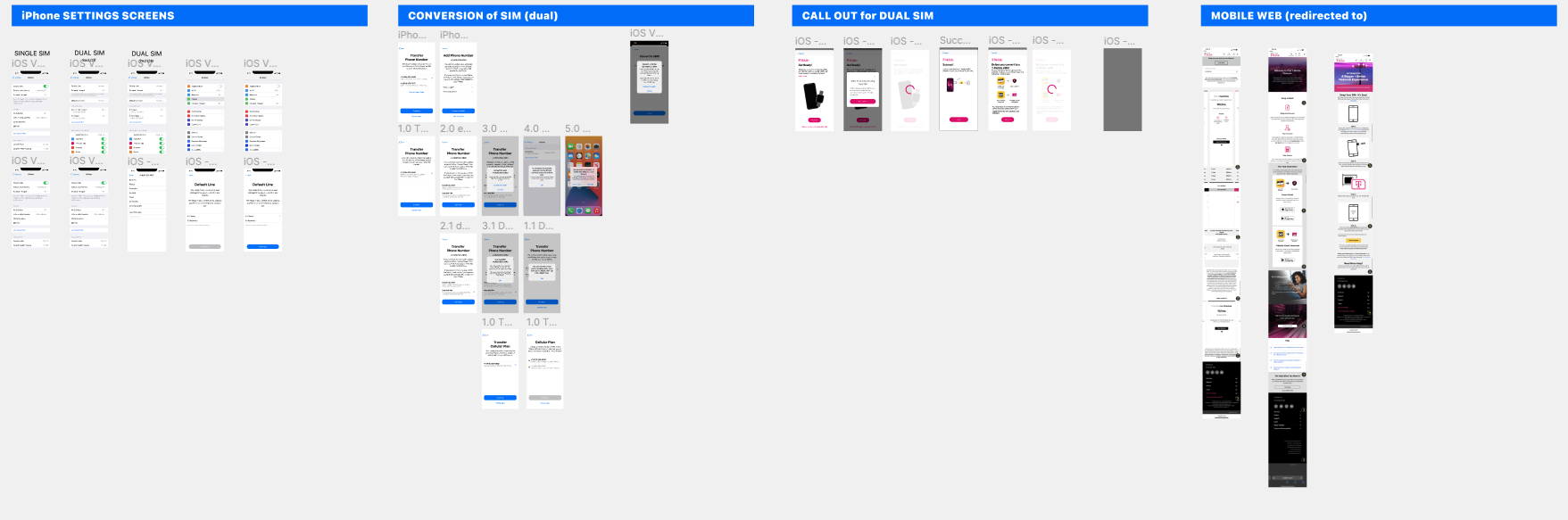
The design process began by mapping the different device and SIM configurations customers might encounter. These included physical-to-embedded SIM conversion, device compatibility, multiple phone lines, and cellular smartwatch provisioning. I worked with technical stakeholders to understand provisioning dependencies and identify scenarios requiring different user journeys. Research into customer familiarity with eSIM technology also informed the approach. Many customers had limited knowledge of eSIMs, reinforcing the importance of clear instructions, understandable terminology, and guided interactions. The resulting design explorations focused on reducing unnecessary decisions, clarifying account and device requirements, and helping customers progress through activation.
DESIGN
The central design challenge was making complex telecommunications processes feel manageable. Rather than exposing customers to technical provisioning terminology, the experience needed to communicate what was happening, what information was required, and what action to take next. I explored interaction flows for different activation scenarios, considering device eligibility, account verification, SIM compatibility, and connected devices. The designs emphasized progressive guidance, clear confirmation states, and instructions appropriate to each customer's situation. The objective was to create a consistent experience while accommodating the technical differences between devices and network configurations.
OUTCOME
My design work contributed to the customer-facing activation experiences developed to support Sprint's transition to T-Mobile. By addressing device compatibility, SIM conversion scenarios, and complex provisioning requirements, the designs helped establish clearer pathways for customers moving between networks. The project demonstrated my ability to translate large-scale telecommunications challenges into understandable product experiences while collaborating across design, engineering, and product teams.